What is HDPE?
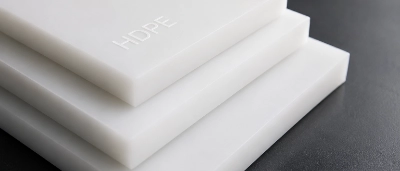
HDPE is a tough, chemically-resistant industrial plastic, built to handle harsh environments without breaking down.
First, what does HDPE stand for? High-density polyethylene—a thermoplastic polymer known for its strength and durability. You’ll find it everywhere from chemical tanks and pipe systems to wear strips, marine components, and food processing equipment.
Now, let’s look at what HDPE is. This guide explains everything you need to know about HDPE from an engineering perspective: how HDPE is made, its benefits, and what HDPE is used for.
What is HDPE Plastic?
HDPE is part of the polyethylene family, except that its molecular structure is more tightly packed.
This higher density comes from minimal branching in the polymer chains. The result is stronger intermolecular bonding, which gives HDPE its rigidity, strength, and improved chemical resistance compared to lower-density plastics like LDPE.
This means HDPE holds its shape under load, resists cracking under impact, and performs reliably in aggressive environments. It also has very low moisture absorption, making it ideal for wet or submerged applications.
For engineering use, HDPE strikes a balance. It’s not as stiff as some high-performance plastics, but it’s far tougher and more forgiving, especially in applications where impact,, or chemical exposure are constant factors.
How is HDPE Made?
HDPE is produced through the polymerisation of ethylene, a gas derived from petroleum.
The process uses catalysts to control how the polymer chains form. These catalysts limit branching in the molecular structure, which is what creates the “high-density” characteristic.
As the polymer chains grow, they form a material with strong, linear alignment. This structure is what gives HDPE its strength and durability.
Once polymerised, the material is cooled and ultimately formed into pellets or powder. These pellets are then used in manufacturing processes like extrusion, blow moulding, roto-moulding, pressing or injection moulding to create finished products.
Processing conditions, such as temperature, pressure, and cooling rate, can influence final properties like stiffness, impact resistance, and stress cracking performance.
What are the Benefits of HDPE
For engineers and fabricators, HDPE is a reliable, cost-effective material that performs consistently under load, moisture, and impact, replacing metals or less durable plastics in demanding applications.
Strength-to-weight ratio: HDPE is lightweight but still handles significant mechanical stress. This makes it easier to install, transport, and machine compared to metals.
Impact Resistance: HDPE can absorb shock without cracking, even in cold environments. This makes it well-suited to applications where materials are exposed to repeated impact or vibration.
Chemical Resistance: HDPE is highly resistant to acids, bases, and many solvents. It doesn’t corrode, which makes it a strong choice for tanks, pipes, and containment systems.
Moisture Resistance: HDPE does not absorb water, so it maintains dimensional stability in wet conditions. It also floats, which is useful in marine and floating infrastructure applications.
UV Stability: UV-stabilised grades are available. These extend service life in Australian conditions, where sunlight exposure can degrade standard plastics over time.
Low Friction: HDPE has a naturally low coefficient of friction, allowing surfaces to slide easily without sticking or dragging. This makes it ideal for wear strips, liners, and conveyor components where smooth material flow reduces energy use, wear, and maintenance, where the additional benefits of UHMWPE are not required.
Long Service Life: All these features add up to long service life with low maintenance, reducing downtime, improving safety, and lowering the total cost of ownership.
What is HDPE Used for?
HDPE is used across a wide range of industries where durability and chemical resistance are essential.
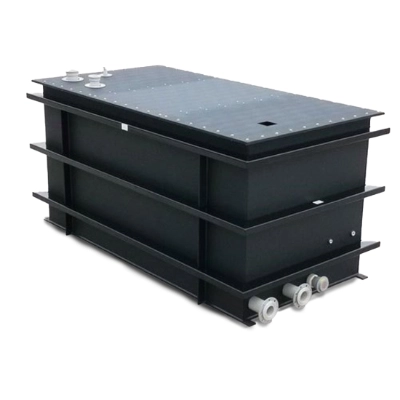
Industrial Applications: HDPE is commonly used for tank, pipe systems, and chemical storage. Its resistance to corrosion makes it a practical alternative to metal. Dotmar products include general-purpose HDPE Polystone G 300 and the highest HDPE standard for tank and pipe fabrication, Polystone PG100.
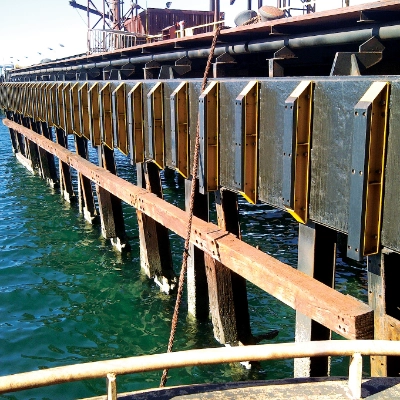
Marine Applications: HDPE is used for jetty components,, and floating structures, where water exposure and impact are constant. Dotmar products include Polystone Marine-Tec.
Food Processing: HDPE is valued for its non-toxic, food-safe properties, making it suitable for cutting boards,, dough rollers and handling equipment.
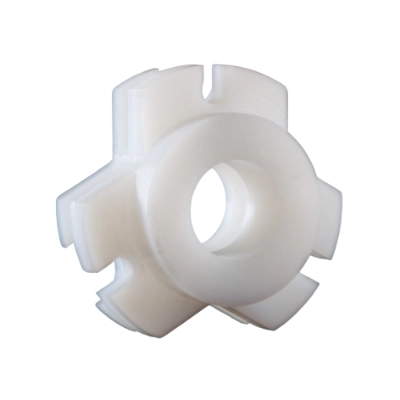
Infrastructure and Construction: HDPE is used as spacers in structural concrete components, decrotive concrete moulds and protective parts.
How to cut and machine HDPE
HDPE is one of the easier plastics to work with, but it still requires the right approach.
HDPE can be cut using standard workshop tools, including circular saws, band saws, and CNC routers. Use sharp tools with moderate speeds to achieve clean cuts without excessive melting.
Because HDPE is softer than many engineering plastics, it can deform under heat. Managing temperature is important. Avoid high cutting speeds and allow chips to clear efficiently to prevent heat buildup.
CNC machining is commonly used for precision parts. HDPE machines well, but it’s important to account for its flexibility. Proper clamping and support help maintain dimensional accuracy.
HDPE can also be welded using plastic welding techniques, making it suitable for fabricating tanks and custom structures. However, bonding with adhesives is difficult due to their low surface energy.
Finishing is straightforward. Edges can be smoothed with light machining or scraping, and the material does not require painting for protection.
Frequently Asked Questions
Can HDPE be glued? Not easily. HDPE has low surface energy, making it difficult for standard adhesives to bond effectively.
Can HDPE be recycled? Yes, HDPE products are readily recycled.
Can HDPE be injection moulded? Yes. HDPE is commonly processed using injection moulding for high-volume parts.
Can HDPE be laser cut? HDPE tends to melt and produce rough edges under laser cutting.
Can HDPE be painted? Painting is possible but requires surface preparation to ensure adhesion.
Can you weld HDPE? Yes. HDPE can be welded using extrusion, hot air or butt welding methods.
Does HDPE float in water? Yes. HDPE is less dense than water, so it floats.
Does HDPE have BPS? No. HDPE does not contain BPA.
How Long does HDPE last? HDPE offers long service life, often lasting decades depending on the application and exposure conditions.
How Much Does HDPE cost? Contact Dotmar to get the most current, competitive prices for your application needs.
How strong is HDPE? For a lightweight material, HDPE has high impact strength and good load-bearing capability.
How to cut HDPE? Use sharp tools, moderate speeds, and proper support to achieve clean, accurate cuts.