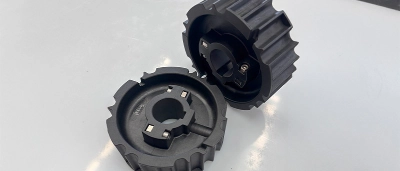
What Is a Sprocket?
If you've ever wondered what is a sprocket, it is a wheel with specially shaped teeth designed to engage with a chain. As the sprocket rotates, its teeth mesh with the chain links, allowing it to transmit rotary motion or drive linear movement without slipping.
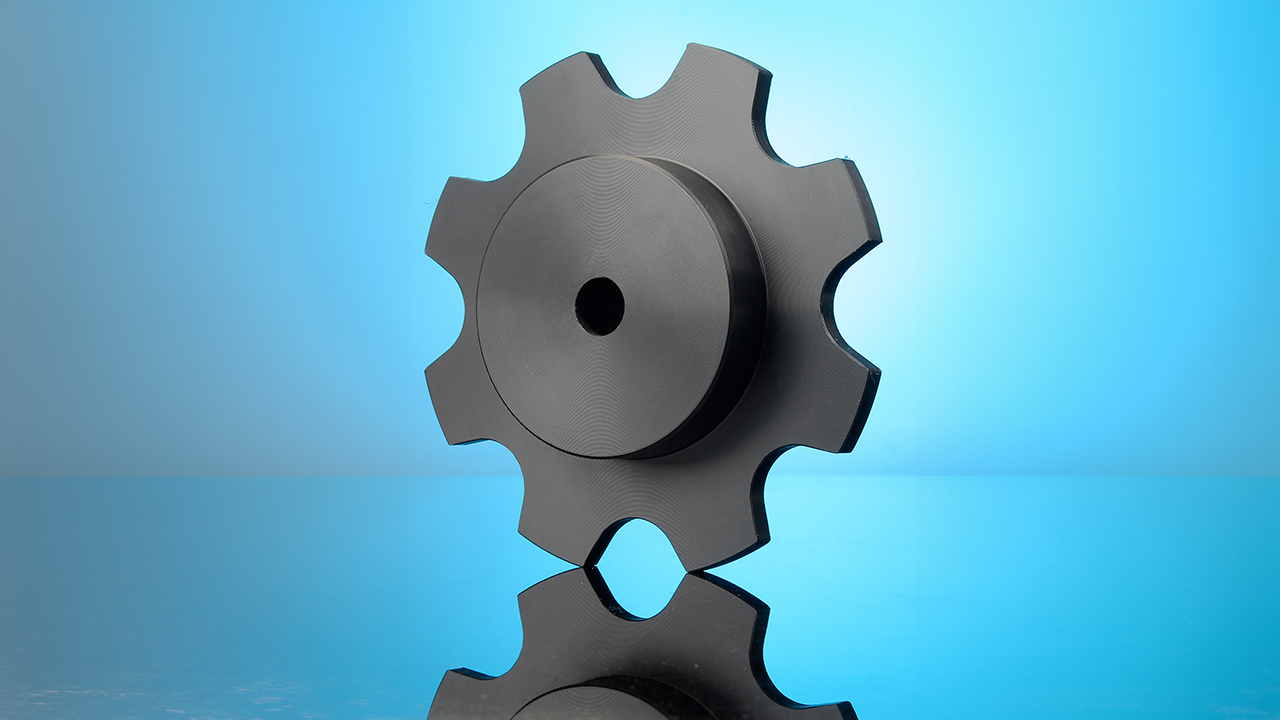
Sprockets are found in everything from bicycles and motorcycles to industrial conveyors, packaging equipment, and manufacturing machinery. In industrial settings, they play a critical role in moving products, transferring power, and keeping production systems running efficiently.
This guide explains how sprockets work, the different types available, common applications, and how to choose the right material for your sprocket.
| TABLE OF CONTENTS |
|---|
| How Does a Sprocket Work? |
| Sprocket vs Gear vs Pulley: What's the Difference? |
| Types of Sprockets |
| Common Applications of Sprockets |
| Plastic Sprockets in Industrial Conveyor Systems |
| How to Select the Right Sprocket |
| Frequently Asked Questions |
How Does a Sprocket Work?
Understanding how to use a sprocket starts with understanding how it works. A sprocket engages directly with the links of a chain. As the drive sprocket rotates, its teeth pull the chain forward, transferring motion and torque to a driven sprocket elsewhere in the system.
Because there is virtually no slippage during operation, sprockets make chain drives highly efficient and reliable, particularly in applications involving heavy loads or synchronisation.

The speed ratio is determined by the tooth count of each sprocket. In a chain drive, a larger sprocket rotates more slowly, while a smaller sprocket rotates faster. This relationship allows power and torque to be transferred efficiently between shafts.
Compared to belt and pulley systems, sprockets generally offer higher load-carrying capacity and more reliable power transmission.
Sprocket vs Gear vs Pulley: What's the Difference?
Although they all transfer motion, sprockets, gears, and pulleys work in different ways.
| Component | Works With | Direct Contact | Applications |
|---|---|---|---|
| Sprocket | Chain | No | High-load chain-driven conveyors |
| Gear | Another gear | Yes | Precision motion transmission |
| Pulley | Smooth belt | No | Lighter belt-driven systems |
Types of Sprockets
Different applications require different sprocket designs.
Single-strand sprockets are designed for a single chain and are commonly used in standard conveyor and drive applications.
Multi-strand sprockets accommodate multiple chains running side by side, increasing load capacity and power transmission.
Straight running sprockets in conveyor systems are used with chains that travel in a straight line.
Side-flexing sprockets are designed for conveyor chains that navigate bends and curves.
Taper lock sprockets simplify installation and removal by using a tapered bush system that securely locks the sprocket onto the shaft.
Idler sprockets do not drive the chain but help maintain chain tension and guide the chain through the system.
Dotmar offers a range of straight running and side-flex sprockets designed specifically for industrial conveyor applications.
Common Applications of Sprockets
Most people are familiar with sprockets on bicycles and motorcycles, where they transfer power from the pedals or engine to the wheels.
In industrial environments, sprockets are commonly used in conveyor systems found in food processing, beverage manufacturing, packaging facilities, distribution centres, and material handling operations.
They are also used in agricultural machinery, industrial equipment, timing drives, construction machinery such as tracked vehicles, and specialised media transport systems including film and tape handling equipment.
For many businesses, conveyor systems represent the most important industrial use of sprockets, making reliable sprocket selection critical to production efficiency.
Plastic Sprockets in Industrial Conveyor Systems
While steel sprockets remain common in heavy-duty applications, plastic sprockets have become increasingly popular in food, beverage, pharmaceutical, and packaging environments.
Manufactured from reinforced polyamide (nylon) and other engineering plastics, plastic sprockets offer several benefits over metal.
✓ Quieter operation compared to metal sprockets
✓ Excellent corrosion resistance
✓ Reliable performance in wet environments
✓ Suitable for frequent washdown areas and sanitising chemicals
✓ Food-safe grades for food processing and packaging applications
✓ Lightweight construction minimises chain and drive wear
✓ Can reduce maintenance requirements and downtime
Dotmar carries a wide range of conveyor solutions and sprockets. Explore our product range to find the right solution for your conveyor system and application requirements.
How to Select the Right Sprocket
When selecting a sprocket, it's important to understand both the chain requirements and the operating environment. While many people ask, “Are sprockets universal?”, the answer is no. Sprockets must be matched to the chain pitch, shaft size, load requirements, and application to ensure reliable performance.
The first step is ensuring the chain pitch and sprocket pitch match exactly. Incorrect sizing can lead to poor performance and premature wear. You'll also need the correct bore size and shaft diameter for secure installation.
Tooth count determines the speed ratio and torque transfer within the system. The choice between single-strand and double-strand sprockets depends on the load being transmitted.
Material selection is equally important. Steel sprockets are suited to heavy-duty applications, while plastic sprockets are ideal for food processing, washdown areas, and corrosive environments.
Factors such as moisture, chemical exposure, and operating temperature should also be considered.
If you're unsure which sprocket is right for your application, Dotmar's engineering team can provide expert guidance.
Frequently Asked Questions
What is a sprocket used for?
A sprocket is used to transfer motion and power through a chain drive system. Understanding what a sprocket is and how it interacts with a chain is important when designing conveyors, machinery, and industrial drive systems.
Are sprockets universal?
No. Sprockets must match the chain pitch, chain type, shaft size, and application requirements.
How do you use a sprocket?
To understand how to use a sprocket, start by matching it to the correct chain. The sprocket is mounted to a shaft and connected to a compatible chain. As the sprocket rotates, it drives or guides the chain through the system
What is the difference between a sprocket and a gear?
A sprocket works with a chain, while gears mesh directly with each other without a chain.
What are sprockets made of?
Sprockets are commonly manufactured from steel, cast iron, reinforced nylon, and other engineering plastics.
What is the difference between a sprocket and a pulley?
A sprocket uses a chain and toothed engagement to transmit motion. A pulley uses a belt and relies on friction or belt teeth to transfer power.

