Engineering Plastics in Sulphuric Acid Recovery: An 8-Metre Polypropylene Precipitation Plate
When chemical resistance, stiffness and cost all matter
Sulphuric acid recovery is an important part of many metallurgical operations, allowing sulphur-containing off-gases generated during smelting to be converted into a valuable sulphuric acid product rather than released to the atmosphere.
The process presents a challenging environment for materials. Components can be exposed to sulphuric acid and other aggressive chemical conditions, making material selection critical to achieving long service life and reliable operation.
For one smelter application, Dotmar was involved in the manufacture of four 8-metre-diameter polypropylene precipitation plates used within the sulphuric acid recovery process.
At this scale, the application presented more than simply a question of chemical compatibility. The material also needed to provide sufficient stiffness, remain cost-effective and be capable of being manufactured accurately from large sheets.
The application
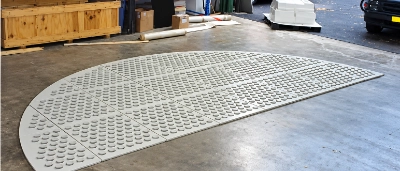
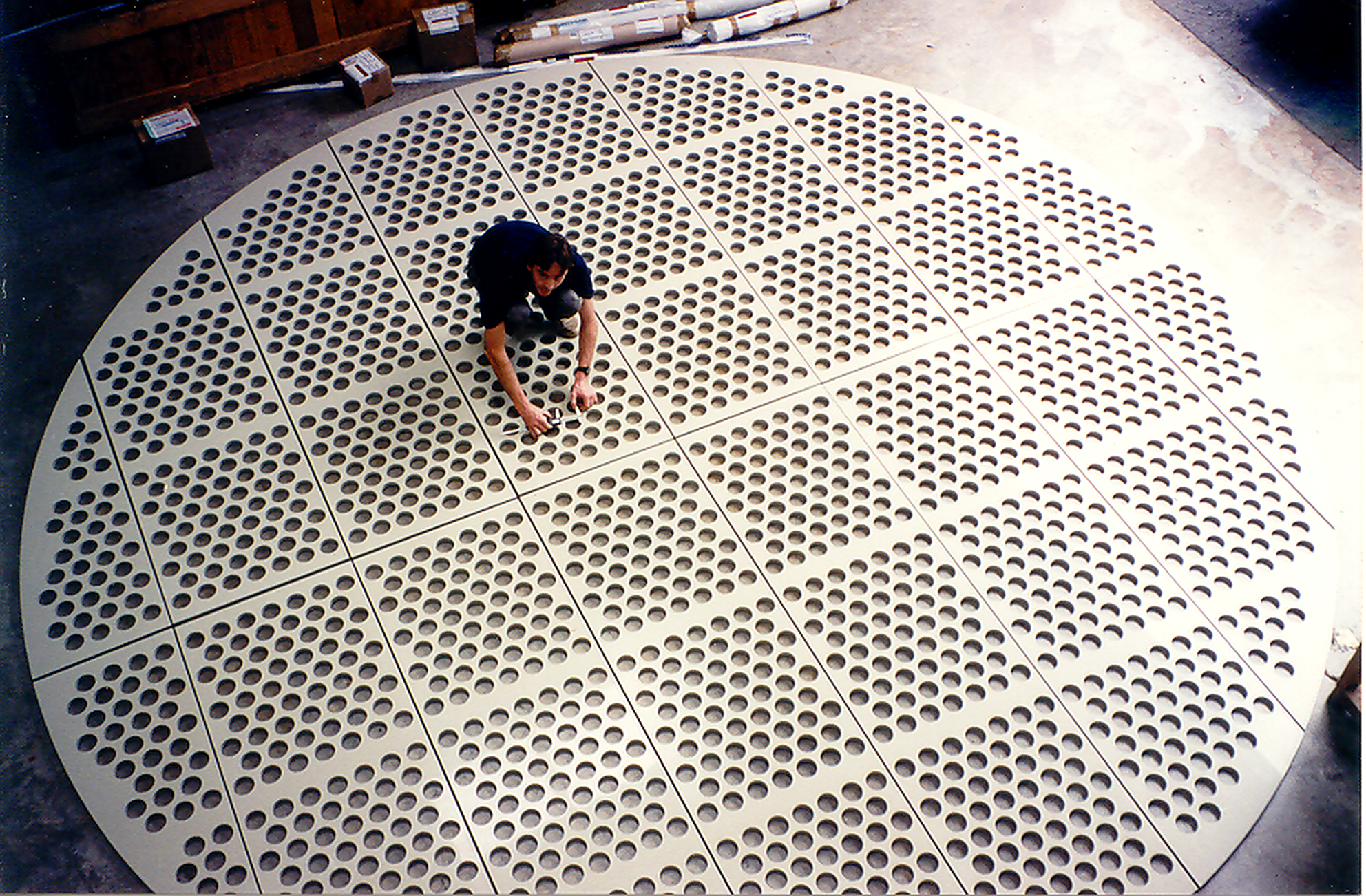
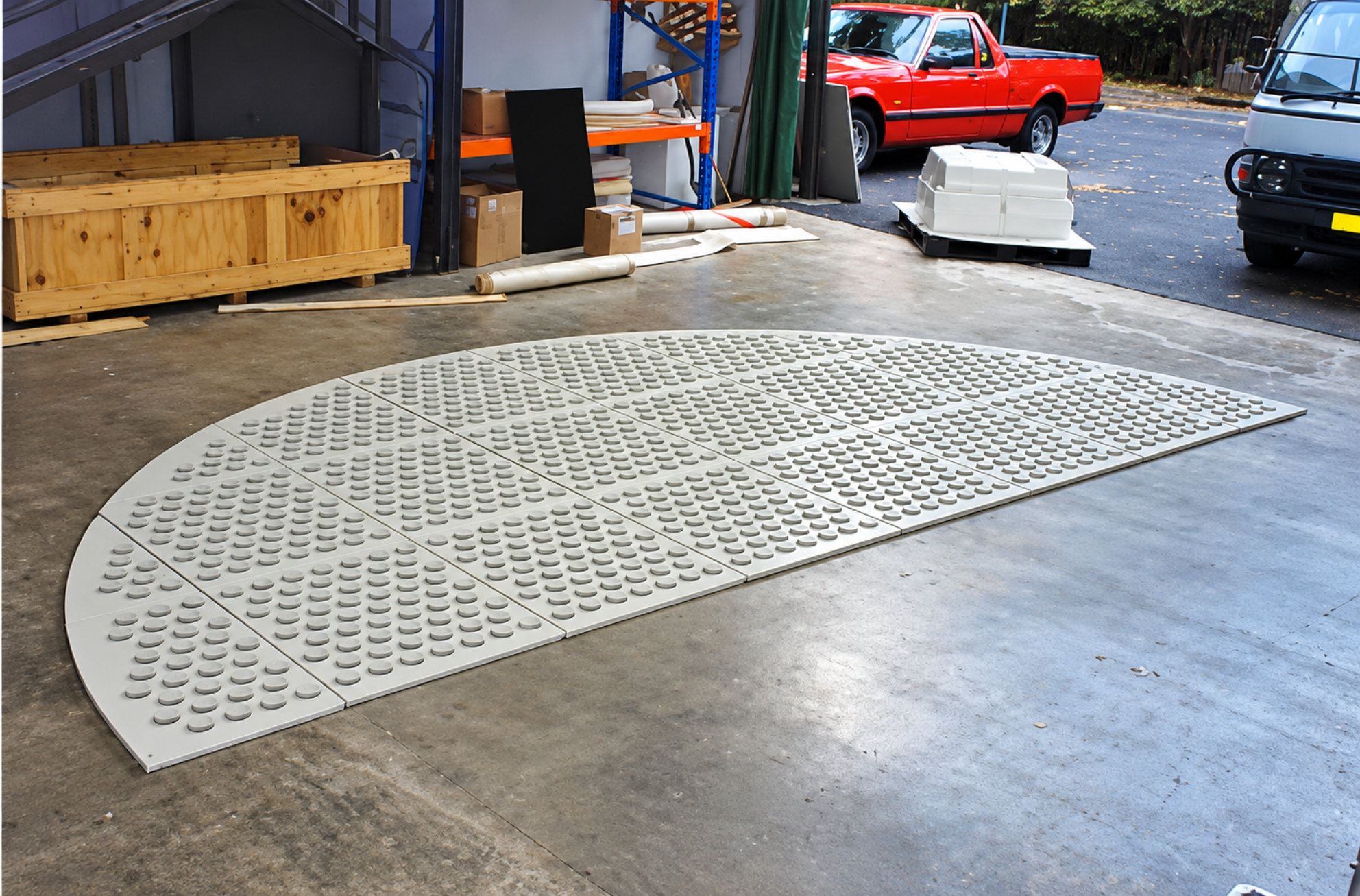
The precipitation plate has an overall diameter of approximately 8 metres and is manufactured from 25 mm thick polypropylene sheet.
Rather than attempting to manufacture the plate as a single component, the large circular structure is produced from multiple segments. These segments are CNC machined from sheet before being assembled to form the complete plate.
The result is a large engineered plastic component designed specifically for the requirements of the sulphuric acid recovery process
Why polypropylene?
The selection of polypropylene was driven by a combination of factors rather than a single material property.
Chemical resistance
The first consideration was the operating environment.
Polypropylene offers good resistance to a wide range of aggressive chemicals and is widely used in chemical processing applications. This made it a suitable candidate for an application involving sulphuric acid recovery.
Material selection for chemical service must always consider the specific chemical concentration, temperature, exposure conditions and mechanical loads. In this application, polypropylene provided the required combination of chemical resistance and physical properties.
Stiffness
Polypropylene was also selected because it provides greater stiffness than polyethylene grades such as HDPE.
For a component approximately 8 metres in diameter, stiffness becomes particularly important. The plate needs to maintain its geometry and resist deformation during operation.
While HDPE also provides good chemical resistance and is widely used in chemical-processing applications, polypropylene provides a better balance of stiffness for this particular design.
Cost
Higher-performance polymers are available that can provide excellent chemical resistance. However, these materials, which include fluoropolymers such as PVDF, can come at a substantially higher cost.
For a component of this size, material cost becomes a significant consideration.
Polypropylene provided the required chemical resistance and stiffness while offering a more economical solution than moving to higher-cost specialty polymers.
The result was a practical engineering solution that balanced performance, durability and cost.
Manufacturing an 8-metre component
The scale of the component created another challenge.
An 8-metre-diameter plate cannot simply be placed on a conventional CNC machining table and manufactured as one piece. Instead, the plate is divided into a series of accurately designed segments.
The segments are machined from 25 mm polypropylene sheet using CNC routers in Dotmar's in-house machine shop.
CNC machining provides the dimensional accuracy and repeatability required to produce the individual segments so that they can subsequently be assembled into the complete circular structure.
This approach also demonstrates one of the advantages of engineering thermoplastics: large components can be manufactured from commercially available sheet using conventional CNC machining techniques, without the need for specialised metal fabrication processes.
From engineering material to engineered solution
The application demonstrates that selecting an engineering plastic is rarely about choosing the polymer with the highest specification.
Instead, successful material selection considers the complete set of application requirements.
For this sulphuric acid recovery application, polypropylene provided the right combination of:
- Chemical resistance
- Stiffness
- Dimensional stability
- Machinability
- Material availability
- Cost effectiveness
Combined with Dotmar's in-house CNC machining capability, this allowed a very large and complex component to be manufactured from segmented polypropylene sheet.
The result
8-metre-diameter, 25 mm thick polypropylene precipitation plates, CNC machined from individual segments and manufactured for service in a sulphuric acid recovery application.
It is a good example of how the right engineering plastic, combined with appropriate design and manufacturing capability, can provide a practical alternative to more expensive materials in demanding industrial environments.
The engineering challenge isn't always finding the most advanced material. It's finding the material that provides the right balance of performance, practicality and cost for the application.
Contact us
Dotmar Engineering Plastics stands poised to address your unique challenges. Harness our expertise for bespoke engineering plastic solutions tailored to your specifications.
Insights
Water Absorption of Nylons Pros, Cons and Busting Myths
Tips for Turning and Drilling Engineering Plastics
Significantly Reduce Your Hangup and Carryback to Optimise Your Mining Operations
What Is PTFE? Engineering Guide to Polytetrafluoroethylene
Plastic Manufacturing Techniques: Injection
Moulding vs Machining vs Custom Casting
Why use Engineering Plastic Bearings and Bushes?
Flametech AST vs AST vs P7000 Article
Plastic Abbreviations
Plastics Properties Table

Plastics Designing for Thermal Expansion
What Is HDPE?

Antistatic vs Static Dissipative Plastics
REXNORD curve system with 1540 series MatTop
What is Polycarbonate
Polystone CubX A Revolution in Rectangular Thermoplastic Tanks
Plastic Technical Tip-Water absorption in Nylon
Performance Pyramid
UHMWPE-Why Does Molecular Weight matter?
HDPE vs PP vs PVC
What is Nylon
Vibratory Conveyor Systems in the Food Industry
Understanding Friction in Plain Bearings and Bushes
Understanding PFAS and the Role of “Polymers of Low Concern” in Engineering Plastics

Sustainability in Practice: Recycling Plastics at Dotmar Injection
Moulding

How To Cut Polycarbonate Sheet

How Is Nylon Produced? Complete Engineering Manufacturing Guide
High‑Performance Coated Fabrics & Conveyor Belting
PE80 vs PE100 HDPE
Dual-Finish HDPE Sheet: One Surface, Two Smart Benefits
What Is PTFE? Engineering Guide to Polytetrafluoroethylene
What is Nylon
Vibratory Conveyor Systems in the Food Industry
How Is Nylon Produced? Complete Engineering Manufacturing Guide

Rochling-Reloop: Leading the Way in Sustainable Plastics
High‑Performance Coated Fabrics & Conveyor Belting
PTFE Coated Glass Fabric – Tortilla & Flat Bread baking Applications
Nylon – The Great All-Rounder of Engineering Plastics
Polyethylene Moisture Resistance in the Food Industry
Ticomp MD – Detectable PTFE for Demanding Food Industry Applications
HDPE: The Versatile Engineering Plastic for the Food Industry
Mining Lining
HDPE Collapsible Containers Supporting Click n Collect
PE80 vs PE100 HDPE
Conveyor Products & Total Solutions for the Food and Beverage Processing & Packaging Industries
Resistawear: Low Friction and Abrasion Resistant Tape
Plastic Machine Guarding - Managing the Risks of Plant in the Workplace
Polystone G Checkerplate - Boat Applications
Dotmar PTFE: Benefits & Capabilities
Fibre Composite Vibratory Springs: High-Performance Spring Technology for Modern Vibratory Systems
PETP - The Engineering Plastic That Excels in Bearing Wear Applications

Sentinel Boats: Pioneering Defence Durability with Polystone PG100 HDPE
What Is PTFE? Engineering Guide to Polytetrafluoroethylene
Plastic Manufacturing Techniques: Injection
Moulding vs Machining vs Custom Casting
What Is HDPE?
What is Polycarbonate
What is Nylon
Vibratory Conveyor Systems in the Food Industry
How To Cut Polycarbonate Sheet
How Is Nylon Produced? Complete Engineering Manufacturing Guide
High‑Performance Coated Fabrics & Conveyor Belting
Polyethylene Moisture Resistance in the Food Industry
Ticomp MD – Detectable PTFE for Demanding Food Industry Applications
HDPE: The Versatile Engineering Plastic for the Food Industry
HDPE Collapsible Containers Supporting Click n Collect
PE80 vs PE100 HDPE
Plastic Machine Guarding - Managing the Risks of Plant in the Workplace
Polystone G Checkerplate - Boat Applications
Fibre Composite Vibratory Springs: High-Performance Spring Technology for Modern Vibratory Systems

Craig “Stinger” Lymbery
Dotmar Victoria Receives PACCAR Kenworth Quality Award

From The Netherlands to Queensland: Cindy Kokkelkoren’s Journey with Dotmar Engineering Plastics
Life of Mick De Reus
Plastic Manufacturing Techniques: Injection
Moulding vs Machining vs Custom Casting
Why use Engineering Plastic Bearings and Bushes?
Plastic Abbreviations
Plastics Properties Table
Plastics Designing for Thermal Expansion
What Is HDPE?
Chain Tension-Right, or Short Chain Life
What is Polycarbonate
Polystone CubX A Revolution in Rectangular Thermoplastic Tanks
UHMWPE-Why Does Molecular Weight matter?
High‑Performance Coated Fabrics & Conveyor Belting
Polyethylene Moisture Resistance in the Food Industry
Ticomp MD – Detectable PTFE for Demanding Food Industry Applications
HDPE: The Versatile Engineering Plastic for the Food Industry
HDPE Collapsible Containers Supporting Click n Collect
PE80 vs PE100 HDPE
Low Friction Wear Pads
Polystone G Checkerplate - Boat Applications
Craig “Stinger” Lymbery
Cooling Tunnel for Hot Filling Line
Dotmar Victoria Receives PACCAR Kenworth Quality Award
From The Netherlands to Queensland: Cindy Kokkelkoren’s Journey with Dotmar Engineering Plastics
Life of Mick De Reus
Craig “Stinger” Lymbery
Why Local Manufacturing is the Smarter Choice in 2025
Dotmar Injection Moulding
Dotmar Victoria Receives PACCAR Kenworth Quality Award
Dotmar Engineering Plastics Acquires Kormax Plastics Division
From The Netherlands to Queensland: Cindy Kokkelkoren’s Journey with Dotmar Engineering Plastics
Computaleta
Joins MM Plastics to Strengthen Market Reach and Customer Support in New
Zealand
Dotmar Engineering
Plastics Expands Capabilities with Fluoro Pacific Consolidation
Regina - Exclusive to Dotmar Engineering Plastics
MM Plastics Invests in New Victorian Super Site
Comparing the technical and commercial benefits of Polystone P CubX for rectangular plastic fabricated tanks and vessels
Cooling Tunnel for Hot Filling Line
Sentinel Boats: Pioneering Defence Durability with Polystone PG100 HDPE
Smart Poly Trailers: Pioneering Plastic Trailers Built from Polystone 300